The state machine behind a weekly show
A weekly live production has a dozen stages, hard deadlines, and one operator. The fix was not more effort. It was a production ledger that always knows exactly where every episode stands, so a crash costs nothing but the restart.
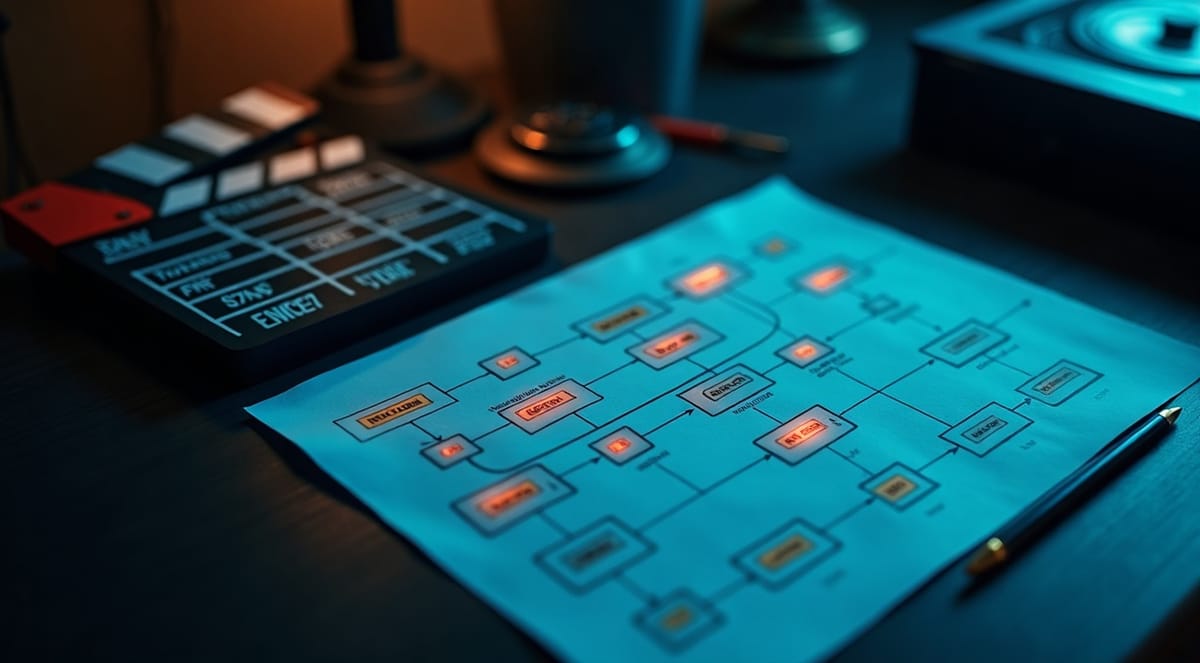
A weekly show is an assembly line that never stops. Every episode moves through the same stages: agenda, live broadcast, trim, transcription, correction, segmentation, clips, thumbnails, uploads, articles, social posts, newsletter. Miss a stage and something ships broken; forget where you were and you redo work you already did. Now run that line for years, alone, around a day job, on machines that sometimes crash.
What the system does
Every episode lives in a production ledger: a small database that tracks each stage of the pipeline with its status, its artifacts, and what comes next. One command reports exactly where any episode stands. When a session dies, a crash, a reboot, a laptop left at the studio, a single resume command reads the ledger and picks up mid-episode with zero retyping and zero archaeology.
Around that ledger sits the automation the stages call for: local transcription with a corrections dictionary that has learned years of local names, clip discovery, vertical renders with captions, branded thumbnails, upload tooling, and a publish chain driven by an ordered, gated runbook. More than a hundred episodes have moved through the line, and the archive they left behind is transcript-indexed and searchable.
The guardrails
- The pipeline pauses where judgment lives. It stops after transcription for human correction, because a wrong local name in print costs trust that automation cannot buy back. Clip selections are proposals until a human approves them.
- State is data, not memory. Nothing about an episode's progress lives in anyone's head or in an open terminal window. If it is not in the ledger, it did not happen.
- Every stage leaves artifacts. Later stages consume files earlier stages wrote, so any stage can be re-run without corrupting the rest.
What happened
- Editing a clip by hand used to take 25 to 40 minutes in an editor. The pipeline renders a week of clips from one recording, staged for approval.
- Two production subscriptions became unnecessary and were cancelled; the replacement runs on owned hardware.
- Crashes stopped being events. The ledger turned "where was I?" from an hour of dread into a command.
What this means for your business
The lesson is not about video. Any recurring multi-stage process, onboarding a client, closing the books, shipping a release, deserves a state machine instead of a checklist in somebody's head. The moment state becomes data, interruptions stop costing rework, handoffs stop losing context, and the process survives the person having a bad day.
The show is described without naming it. The numbers are real. If your recurring process lives in one person's memory, start with a roadmap session.